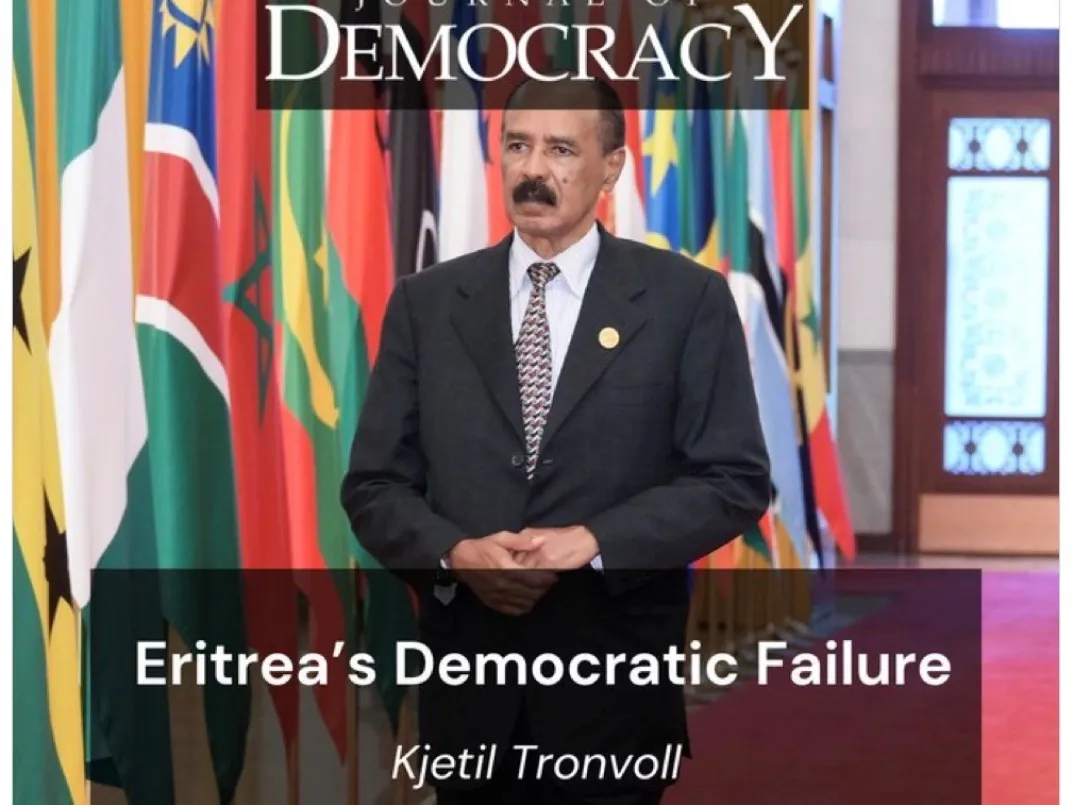
Eritrea's Democratic Failure
Artikkelen analyserer den feilslåtte demokratiske utviklingen i Eritrea etter uavhengighet i 1991/93. Kjetil Tronvoll bygger på sitt antropologiske feltarbeid i landet i overgangsperioden 1991-93 og gjennom 1990-tallet for å belyse hvordan regimet bygget opp en autokratisk styringsmodell som har vedvart til i dag.
Publisert i Forskningsaktuelt Mandag 3. august, 2026 - 12:37 | sist oppdatert Mandag 3. august, 2026 - 12:52
Forfatter
Kjetil Tronvoll
Tidskrift
Journal of Demoracy
Abstract
It is a common assertion, repeated in international policy circles and human-rights reports, that Eritrea is one of only two entities in the world, alongside the Vatican, never to have held a national election. The claim is wrong. Eritrea has, in fact, organized two electoral exercises and come close to a third. What that incorrect assertion inadvertently captures, however, is the near-total erasure from memory of the democratic experiments that the Eritrean People’s Liberation Front (EPLF) briefly attempted, and then methodically abandoned, in the years following independence. Those experiments, and the ideological reasons they were doomed from the start, warrant closer scrutiny now—both as history and as a key to understanding the political impasse that the country and its region now face, as well as the hazards they will likely have to navigate when the regime finally collapses.