Liv Merve Abrahamsson
Førsteamanuensis
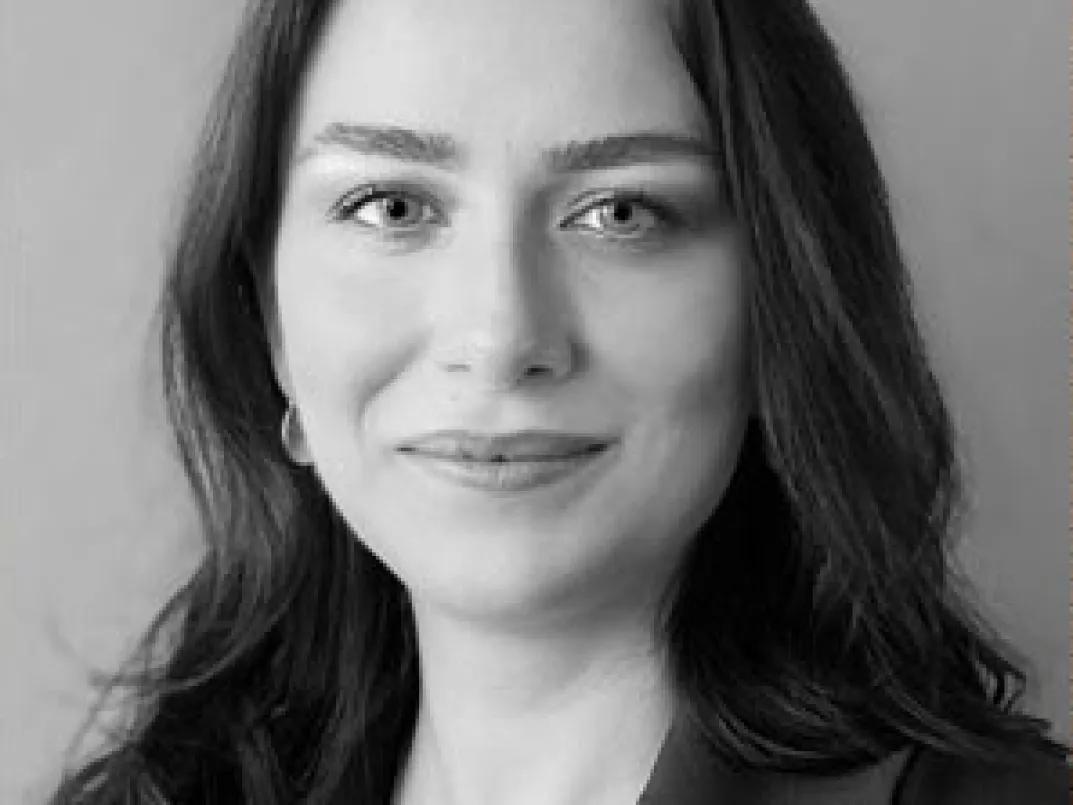
Liv Merve Abrahamsson is an associate professor at the Department of Psychology at Oslo New University College.
Liv Merve Abrahamsson’s research centers on auditory cognition, voice and music perception, and human-AI interaction. She is deeply interested in understanding how the human brain processes emotions and allocates attention across natural and digital sounds both within neurotypical and neurodivergent populations. Her recent work examines human behavioral and neural responses to artificial intelligence (AI) generated voices and music, auditory emotion perception in autism, alongside broader topics and questions in cognitive psychology and technology. Through her teaching and supervision activities, she aims to guide and excite students in topics within and at the intersection of cognitive psychology, cognitive neuroscience, and digital technologies.
Background
Education
- 2025 Program for Basic Competence in University Pedagogy, University of Oslo, Norway
- 2025 Research Leadership Program, University of Oslo, Norway
- 2022 Ph.D. in Auditory Cognition, University of Oslo, Norway
- 2016 M.Sc. in Psychology (Double specialization in Cognitive Neuropsychology and Social Psychology), Lund University, Sweden
- 2014 B.Sc. in Psychology, Izmir University of Economics, Turkey.
Academic positions
- 2023-2026 Postdoctoral Fellow, Section for Cognitive and Clinical Neuroscience, University of Oslo
- 2024 Guest researcher, Faculty of Education, University of Helsinki, Finland
- 2024 Guest researcher, Department of Psychology, University of Jyväskylä, Finland
- 2022-2023 Research Fellow, RITMO Norwegian Center of Excellence for Interdisciplinary Studies of Rhythm, Time and Motion, University of Oslo, Norway
- 2017-2022 Doctoral Research Fellow, RITMO Norwegian Center of Excellence for Interdisciplinary Studies of Rhythm, Time and Motion, University of Oslo, Norway
Research interests
- Human perception of AI-generated stimuli
- Attention, perception, and memory
- Social cognitive neuroscience
- Cognition and perception in neurodivergent populations (Autism, ADHD)
- Music psychology
- Voice and face perception
- Expert performance
- Human-AI interaction in decision making, creativity, and education